Published May 1, 2026 · Pageflare Team · Updated May 1, 2026 · 5 min read
The 2026 SEO Pivot: Why Traditional Keywords Are Failing Your AI Visibility
Bing’s 2026 shift toward Generative Engine Optimization means citations—not blue links—decide visibility. Learn the three technical pillars that make content Copilot-ready.
All posts
In April 2026, search visibly split: Bing leaned harder into Generative Engine Optimization (GEO)—how well assistants like Copilot and ChatGPT can parse, trust, and cite you—versus pages tuned only for keyword density and legacy links. If that is still your sole playbook, you are fading from the fastest-growing discovery path.
The new reality: citations beat clicks
In AI-assisted answers, citations are not a nice-to-have footnote—they are the distribution channel.
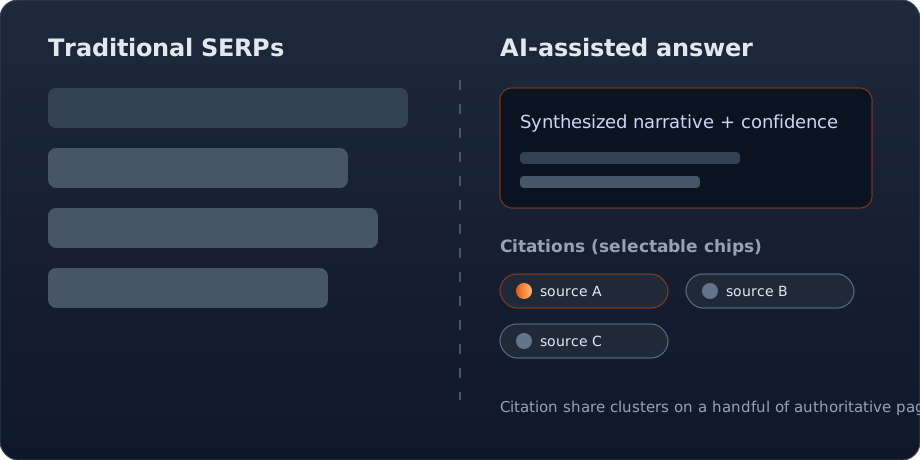
On traditional SERPs you fought for a blue link. In AI search, citations are the new currency: the model synthesizes an answer and surfaces clickable sources. Our data shows citation share is highly concentrated—in many categories a single page can capture nearly 70% of citations.
Data note: the ~70% figure reflects Pageflare’s internal sampling of assistant citation panels (early 2026, B2B software–leaning topics). Treat it as directional for your own vertical—not a universal guarantee.
If your page is not citation-ready, you do not lose “a few clicks”; you are often omitted from the answer altogether.
Three technical pillars to win AI citations
Each pillar cuts parse, verification, or experience risk; weaken one and citation odds drop fast.
Winning citations in 2026 means treating your site as a structured data machine. That is where Pageflare’s technical baseline becomes a competitive advantage:
1. Entity verification with sameAs schema
Models struggle with entity ambiguity—they must trust that your site, LinkedIn, Crunchbase, and similar profiles are the same organization.
Strategy: Ship Organization (and related) schema with a strong sameAs list. Map every authoritative profile—G2, GitHub, Microsoft App Source, and more—to your canonical site.
Minimal Organization wiring (replace URLs with yours):
{ "@context": "https://schema.org", "@type": "Organization", "name": "Your Brand", "url": "https://yourdomain.com", "sameAs": [ "https://www.linkedin.com/company/your-brand", "https://github.com/your-org" ]}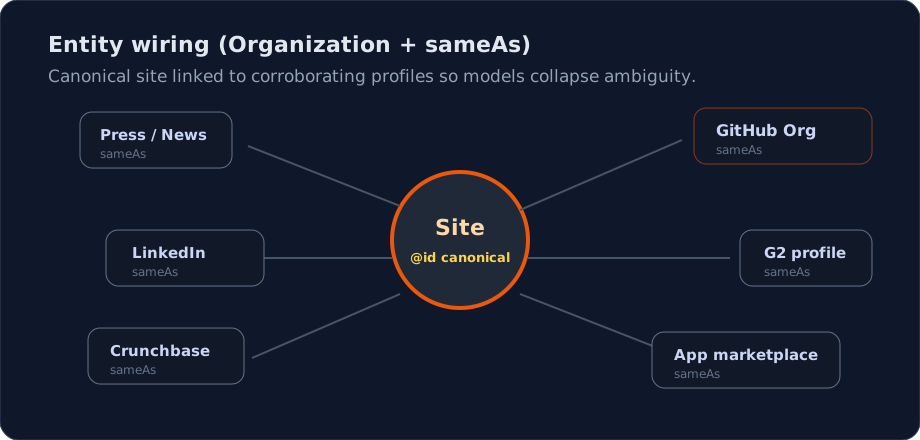
Pageflare: We help inject and align these trust signals so your brand entity stays consistent where models look for verification.
2. Answer-first structure for extractive models
Assistants extract facts and steps; bury the answer and they pick a competitor.
Strategy: Use FAQPage, HowTo, and Article schema where it fits; state the core answer in the first ~100 words, then headings, numbered lists, and tables like the one below.
| Pattern | Why AI systems like it |
|---|---|
| Explicit Q&A blocks | Map cleanly to FAQ snippets |
| Numbered steps | Match HowTo-style extraction |
| Bold key claims | Faster span selection |
Pageflare: Post-build passes can normalize heading hierarchy (<h1>–<h6>) and keep structured data aligned with visible copy—fewer accurate blocks beat JSON-LD that contradicts the headline.
3. Speed as a trust signal
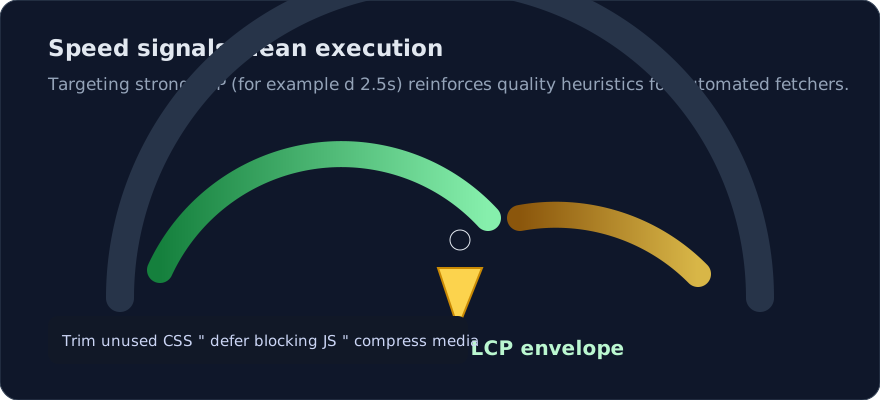
Low latency tracks with quality heuristics in some automated fetch paths—not just human UX. LCP under ~2.5s on key templates is a sane bar.
Strategy: Cut unused CSS, defer non-critical JS, and drop script bloat that adds little signal.
Pageflare: Zero-config optimization targets the performance bar modern indexes expect, so technical debt is less likely to disqualify you on speed alone.
Is your site Copilot-ready?
AI-assisted search is already the default for a large share of discovery. Miss Copilot’s citation set and you miss a top referral path for 2026.
The Pageflare advantage
Pageflare is how you turn noisy static output into templates that assistants can confidently reuse as sources—not just crawl.
Pageflare is not only about raw speed; it is schema, clean markup, and performance that read as a source of truth.
Next steps
Ready for the AI citation era? Get a technical SEO audit with Pageflare so you are getting cited, not just ranking.
Related posts